
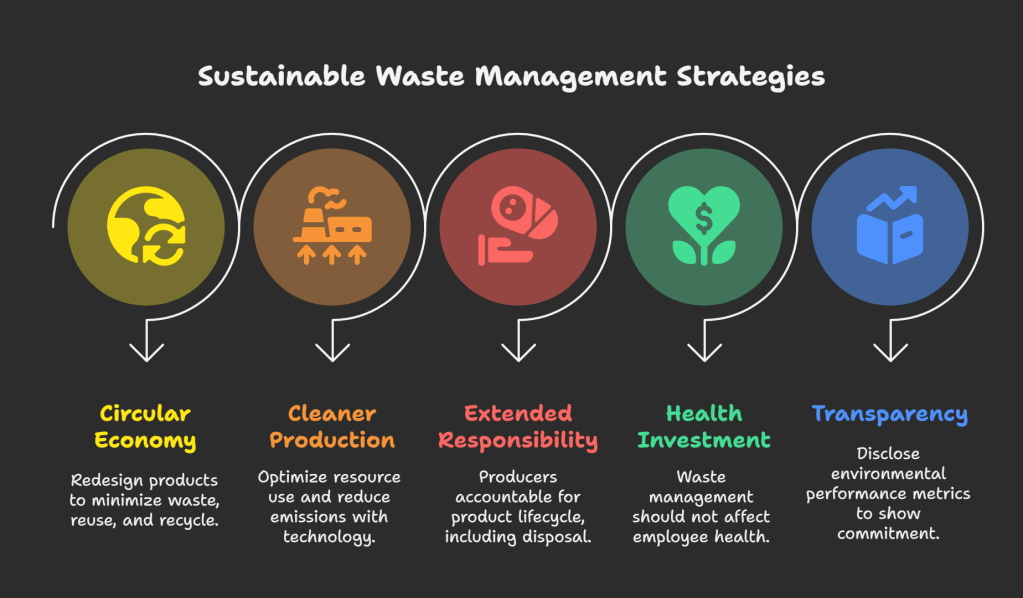
In 1978, residents of Love Canal, New York, discovered that their homes had been built on a former chemical waste dump. Toxic substances were seeping into basements, contaminating water supplies, and causing health crises. The company responsible, Hooker Chemical, had buried 21,000 tons of industrial waste decades earlier, then sold the land for development. The resulting scandal didn’t just cost the company financially; it fundamentally altered how businesses understood their relationship to waste.
Forty-seven years later, that lesson remains incompletely learned. Most organizations treat waste and pollution as operational externalities, problems to be managed efficiently, reported compliantly, and preferably rendered invisible. Few recognize them for what they actually are: material evidence of how your organization thinks about consequences, accountability, and long-term responsibility.
The question is not whether your organization generates waste. Every organization does. The question is whether you can communicate your waste management strategy in a way that demonstrates institutional maturity rather than inviting questions about whether you understand the reputational liability you’re creating.
Why compliance is not enough
Most organizations approach waste as a regulatory challenge. They implement disposal protocols, track emissions, publish environmental impact statements, and ensure compliance with local regulations. Few integrate waste management as a strategic narrative that differentiates their operational sophistication and long-term thinking.
The average approach generates predictable outcomes, regulatory compliance, baseline environmental performance, perhaps certification that waste meets disposal standards. But this, in truth, is minimum viability. Any operations team can manage compliance. The real work, the kind that transforms waste management from liability mitigation into competitive differentiation, begins when organizations stop asking are we compliant and start asking what does our approach to waste reveal about our institutional values and strategic foresight.
This is where my work begins.
My approach does not rest in waste audits or pollution control systems. It begins in the narrative architecture that determines whether your waste management demonstrates operational excellence or invites scrutiny about corners being cut, externalities being ignored, or long-term risks being deferred. My role is not to design waste programs; it is to ensure your environmental management strengthens stakeholder confidence rather than creating vulnerability.
What you’re really paying for
You are not hiring an environmental consultant. You are investing in reputational insulation against the inevitable scrutiny of how you handle consequences.
I work at the intersection of operational reality and stakeholder perception. That means anticipating community backlash before it organizes. Identifying gaps between your waste management claims and what investigation would reveal. Translating pollution reduction into strategic narratives that demonstrate institutional responsibility rather than reactive damage control.
Where others focus on disposal efficiency, I architect credibility. Where others minimize waste, I ensure your waste management reinforces rather than undermines your broader claims about corporate responsibility.
The investment reflects the stakes: waste management that appears careless, outsourced without oversight, or inconsistent with stated values doesn’t just create operational risk, it positions your organization as either negligent or cynical about environmental and community impact.
How it works
Waste Management Communication Audit
I begin by evaluating your current waste and pollution positioning, operational practices, community engagement, regulatory compliance, and competitive benchmarking. This assessment identifies disconnects between your environmental management and how stakeholders perceive your commitment to responsible operations.
Strategic Narrative Development
Working collaboratively with your operations and sustainability teams, I develop communication frameworks that position waste management as evidence of operational excellence rather than regulatory obligation. These frameworks translate disposal metrics into stakeholder value, showing communities why your practices protect their health, showing investors why they reduce long-term liability, and showing customers why they align with responsible production.
Community and Stakeholder Engagement Strategy
I provide comprehensive communication plans for environmental management, internal messaging that builds employee pride in responsible practices, community outreach that demonstrates genuine commitment to local impact, and media positioning that establishes environmental leadership while avoiding greenwashing accusations.
Crisis Prevention and Response Protocols
As environmental scrutiny intensifies and incidents inevitably occur, I remain available for strategic support, whether responding to community complaints, addressing regulatory violations, or managing media coverage when waste management practices face unexpected challenges.
The risk you can’t afford to ignore
Waste failures don’t arrive as disposal problems; they arrive as trust crises. A pollution incident that affects community health doesn’t just create liability; it reveals whether leadership prioritizes cost savings over consequence management. A waste shipment to questionable facilities doesn’t just raise regulatory questions; it suggests your organization treats environmental responsibility as someone else’s problem.
And in an environment where corporate accountability extends far beyond direct operations to include supply chains, disposal partners, and long-term environmental impact, these perceptions can destroy stakeholder relationships that took years to establish.
What I offer is not just communication support. It is strategic protection. The difference between managing waste compliantly and managing it credibly is subtle, but for organizations with established reputations, it’s the difference between operational maturity and becoming the next cautionary tale about environmental negligence.
Waste management is your accountability statement
The most sophisticated leaders are not those who generate the least waste. They are those who recognize that how you handle consequences reveals more about organizational character than how you generate success.
Waste and pollution management is not a shortcut to environmental credentials. It is the most honest indicator of whether your organization takes responsibility for the full scope of its impact. If that responsibility is unclear, outsourced without oversight, or contradicted by cost-cutting decisions, stakeholders will question your integrity. If it is managed with transparency, operational rigor, and genuine commitment to minimizing harm, it becomes your most credible evidence of institutional responsibility.
Ready to discuss your waste and pollution strategy?
Contact me to schedule your complimentary initial consultation.
 Dissectra